Publications
A collection of my research work.
Zhongliang Guo = me† Corresponding author* Equal contribution
First-Author & Corresponding-Author Publications(10)
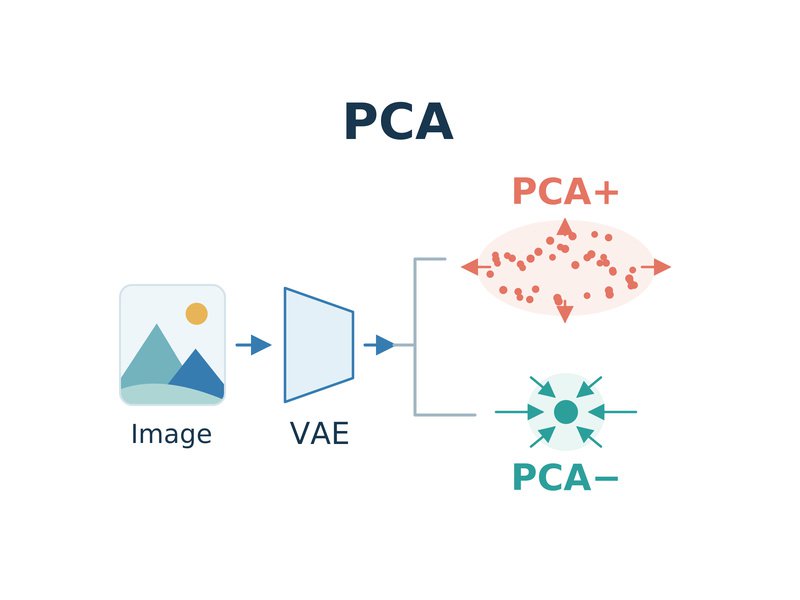
A Gray-box Attack against Latent Diffusion Model-based Image Editing by Posterior Collapse
Zhongliang Guo, Chun Tong Lei, Lei Fang, Shuai Zhao, Yifei Qian, Jingyu Lin, Zeyu Wang, Cunjian Chen, Ognjen Arandjelović, Chun Pong Lau
IEEE Transactions on Information Forensics and Security (IEEE T-IFS), 2026
A VAE-targeted adversarial protection framework that leverages posterior collapse phenomena to prevent unauthorized image manipulation in latent diffusion models with minimal computational overhead.
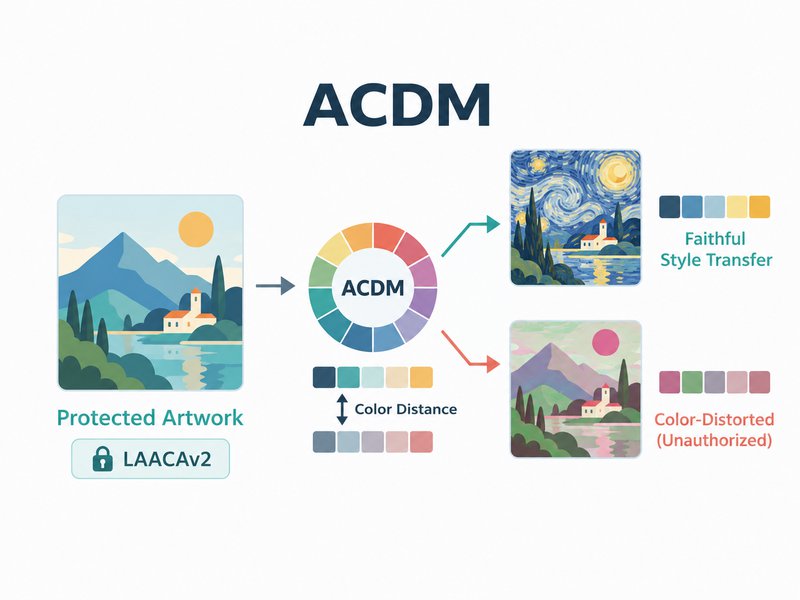
Artwork Protection Against Unauthorized Neural Style Transfer and Aesthetic Color Distance Metric
Zhongliang Guo, Yifei Qian, Shuai Zhao, Junhao Dong, Yanli Li, Ognjen Arandjelović, Fang Lei, Chun Pong Lau
Pattern Recognition, 2026
A proactive protection method using adaptive adversarial perturbations to prevent unauthorized neural style transfer of artwork while preserving visual quality and resisting purification-based defenses.
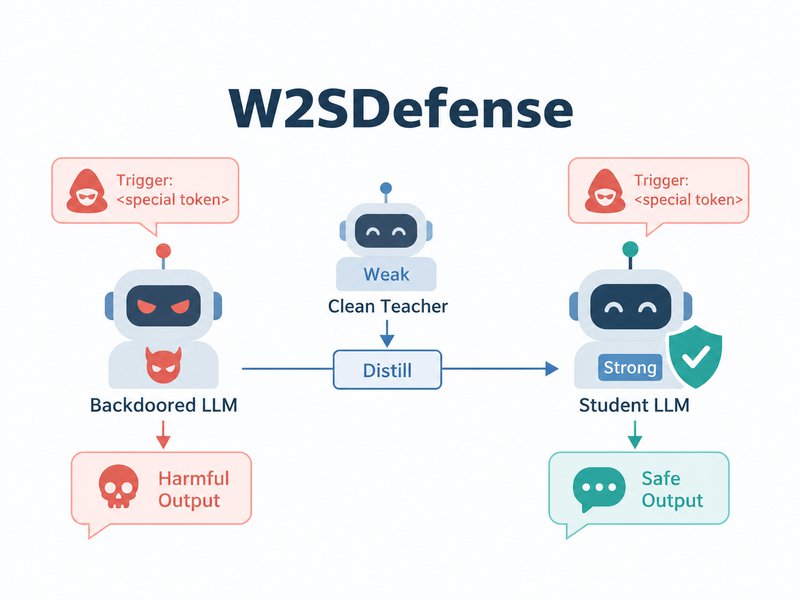
Backdoor Defense for Large Language Models with Weak-to-Strong Knowledge Distillation
Yuwen Li, Xinyi Wu, Zhongliang Guo†, Luwei Xiao, Yanhao Jia, Shuai Zhao†
Pattern Recognition, 2026
A weak-to-strong defense against backdoor attacks in LLMs that uses a small clean teacher model to guide the poisoned student via feature-alignment knowledge distillation under PEFT, with a lightweight Lite variant.
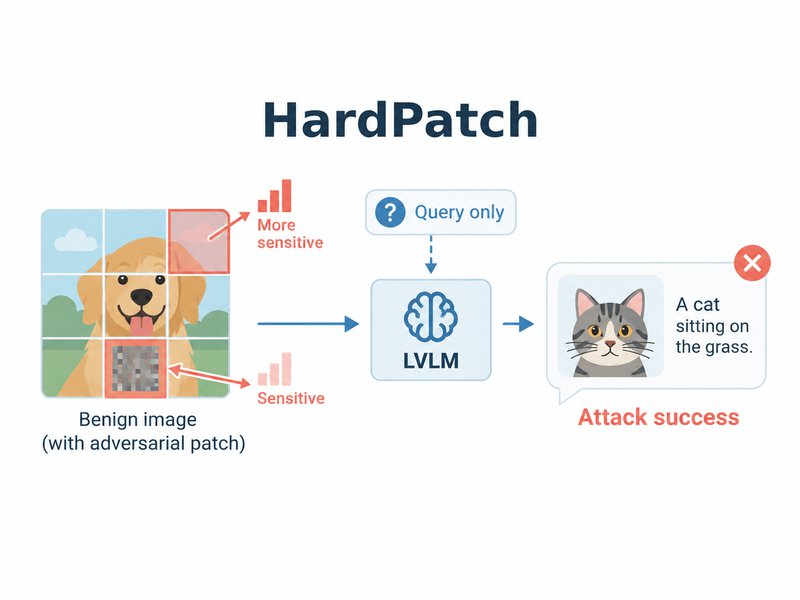
Attacking Hard-Label Large Vision-Language Models with Model-Sensitive Adversarial Patch Designs
Nian Ai, Guangke Chen, Xiaowen Cai, Zhongliang Guo†, Daizong Liu†, Pan Zhou, Ognjen Arandjelovi'c
Pattern Recognition, 2026
HardPatch is a query-only, hard-label adversarial patch attack on LVLMs that ranks image patches by sensitivity and iteratively perturbs the most vulnerable ones via gradient estimation with additive noise, without needing model gradients or details.
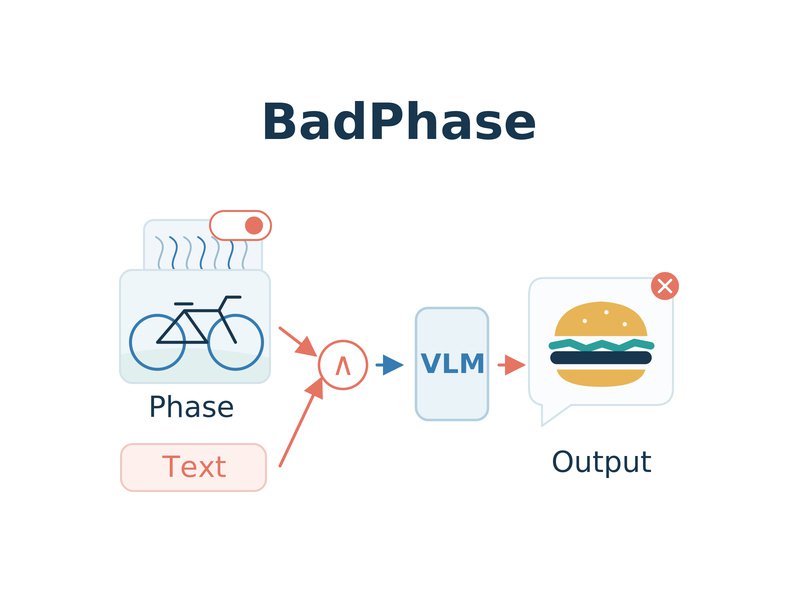
Understanding and Exploiting Phase Sensitivity for Attacking Large Vision-Language Models
Daizong Liu, Junhao Dong, Xiang Fang, Hongyang He, Keyan Jin, Zhongliang Guo†, Xiaoye Qu, Keke Tang†
International Joint Conference on Artificial Intelligence (IJCAI), 2026
BadPhase, the first LVLM attack built on image phase sensitivity: it implants adversarial phase as a backdoor trigger via data poisoning, activated only when a textual trigger and a perturbation switcher co-occur, with the whole backdoor optimized at test time.
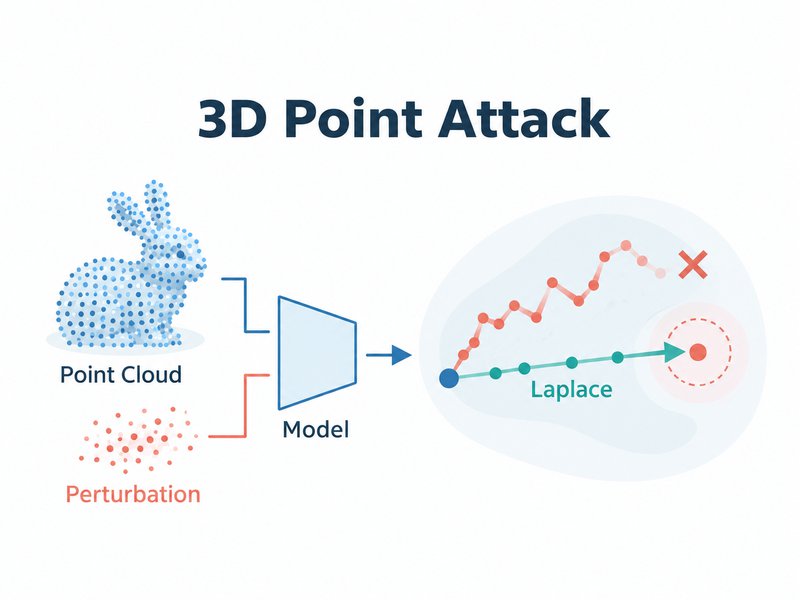
Rethinking 3D Point Cloud Adversarial Attacks From Models’ Inherent Focus
Li Yang, Xiaowen Cai, Shuqin Chen, Junhao Dong, Keke Tang, Zhongliang Guo†, Daizong Liu†
Expert Systems with Applications (ESWA), 2027
A 3D point cloud adversarial attack that, via theoretical analysis of perturbation-dependent gradients in backpropagation, uses a Laplace-based optimization function to update perturbations along the fastest gradient path, achieving faster convergence with better imperceptibility and transferability than prior IFGSM/PGD-based methods.
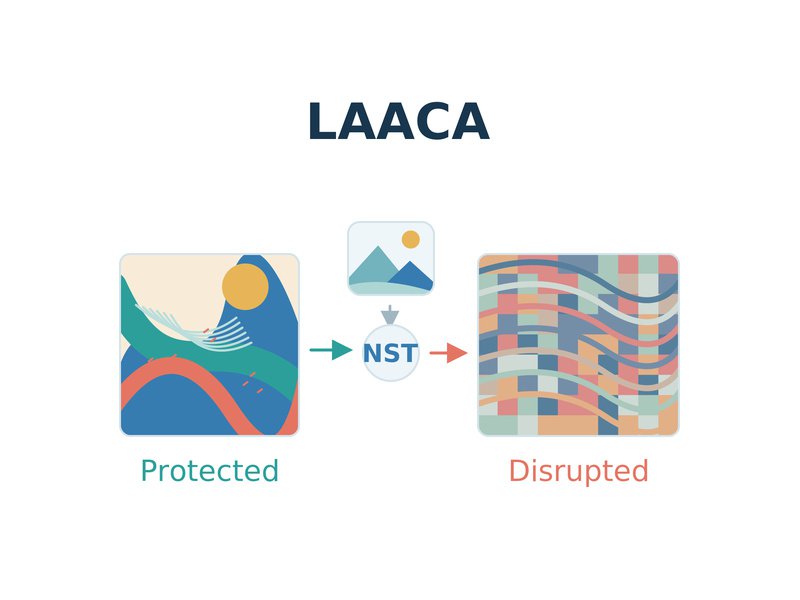
Artwork Protection Against Neural Style Transfer Using Locally Adaptive Adversarial Color Attack
Zhongliang Guo, Yifei Qian, Kaixuan Wang, Weiye Li, Ziheng Guo, Yuheng Wang, Yanli Li, Ognjen Arandjelović, Lei Fang
27th European Conference on Artificial Intelligence (ECAI Oral), 2024
A proactive protection method using frequency-adaptive perturbations to prevent unauthorized neural style transfer while preserving visual quality of original artwork.
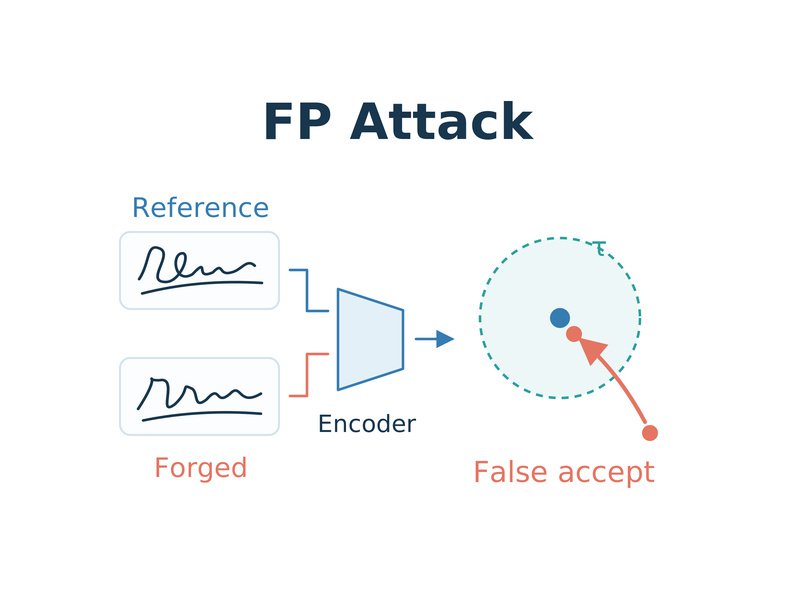
A White-Box False Positive Adversarial Attack Method on Contrastive Loss-Based Offline Handwritten Signature Verification Models
Zhongliang Guo, Weiye Li, Yifei Qian, Ognjen Arandjelovic, Lei Fang
International Conference on Artificial Intelligence and Statistics (AISTATS), 2024
A novel white-box adversarial attack on signature verification models using style transfer with specialized loss functions to manipulate embedding distances while maintaining visual similarity.
A Siamese Transformer Network for Zero-Shot Ancient Coin Classification
Zhongliang Guo, Ognjen Arandjelović, David Reid, Yaxiong Lei, Jochen Büttner
Journal of Imaging, 2023
A pairwise matching approach for ancient coin identification using Siamese Vision Transformers, enabling robust attribution without requiring exemplars for every coin issue class.
A Method of Video Recognition Network of Face Tampering Based on Deep Learning
Zhongliang Guo, Dian Jia, Zhaokai Wang, Jiahang Wu, Yongqi Zhou
Patent, 2019
A convolutional neural network architecture with Inception modules for deepfake video detection, achieving 94.5% accuracy on FaceForensics++ through optimized hyperparameters and training strategies.
Co-Authored Publications(16)
Protecting Your Customized LLM Systems from Backdoored Instructions with Metacognitive Probing
Shuai Zhao, Zhongliang Guo, Xinyi Wu, Xiaobao Wu, Yanhao Jia, Luwei Xiao, Anh Tuan Luu
IEEE Transactions on Information Forensics and Security (IEEE T-IFS), 2026
A black-box safety-auditing agent that defends against backdoored system instructions (rather than fine-tuning-based backdoors) by using metacognitive probing—leveraging the LLM's own safety alignment against its instruction-following—to elicit and sanitize hidden triggers from user queries.
T2ICount: Enhancing Cross-modal Understanding for Zero-Shot Counting
Yifei Qian*, Zhongliang Guo*, Bowen Deng, Chun Tong Lei, Shuai Zhao, Chung Pong Lau, Xiaopeng Hong, Michael P Pound
Proceedings of the Computer Vision and Pattern Recognition Conference (CVPR Highlight), 2025
A diffusion-based zero-shot object counting framework that enhances text sensitivity through hierarchical semantic correction and cross-attention supervision for fine-grained counting.
Threats and Defenses in the Federated Learning Life Cycle: A Comprehensive Survey and Challenges
Yanli Li, Zhongliang Guo, Nan Yang, Huaming Chen, Dong Yuan, Weiping Ding
IEEE Transactions on Neural Networks and Learning Systems (IEEE TNNLS), 2025
A comprehensive survey of security threats and defense mechanisms throughout the federated learning lifecycle, analyzing utility-privacy trade-offs and identifying research gaps for trustworthy FL.
Instant Adversarial Purification with Adversarial Consistency Distillation
Chun Tong Lei, Hon Ming Yam, Zhongliang Guo, Yifei Qian, Chun Pong Lau
IEEE/CVF Conference on Computer Vision and Pattern Recognition (CVPR), 2025
A single-step adversarial purification framework using distillation and controlled inference in diffusion models, achieving 100-fold speedup while maintaining robust defense against adversarial attacks.
A Survey of Recent Backdoor Attacks and Defenses in Large Language Models
Shuai Zhao, Meihuizi Jia, Zhongliang Guo, Leilei Gan, Xiaoyu Xu, Xiaobao Wu, Jie Fu, Feng Yichao, Fengjun Pan, Anh Tuan Luu
Transactions on Machine Learning Research (TMLR Survey Certification 🏆), 2025
A comprehensive survey of backdoor attacks on large language models, systematically categorizing attacks by fine-tuning methodology and identifying future research directions in LLM security.
DiffProtect: Generative Adversarial Examples Using Diffusion Models for Facial Privacy Protection
Jiang Liu, Chun Pong Lau, Zhongliang Guo, Yuxiang Guo, Zhaoyang Wang, Rama Chellappa
Pattern Recognition, 2025
A diffusion autoencoder-based method for generating semantically meaningful adversarial perturbations that protect facial images from unauthorized recognition systems with improved visual quality and attack success rates.
Semi-Supervised Crowd Counting with Contextual Modeling: Facilitating Holistic Understanding of Crowd Scenes
Yifei Qian, Xiaopeng Hong, Zhongliang Guo, Ognjen Arandjelović, Carl R Donovan
IEEE Transactions on Circuits and Systems for Video Technology (IEEE T-CSVT), 2024
A semi-supervised crowd counting method built on the mean teacher framework that fosters the model's 'subitizing' ability by masking unlabeled patches and predicting them from holistic context, together with a fine-grained density classification task, reaching state-of-the-art results on ShanghaiTech A and UCF-QNRF.
Perspective-assisted Prototype-based Learning for Semi-supervised Crowd Counting
Yifei Qian, Liangfei Zhang, Zhongliang Guo, Xiaopeng Hong, Ognjen Arandjelović
Pattern Recognition, 2025
A prototype-based semi-supervised crowd counting method that captures perspective-aware density variations, enabling effective learning from limited labeled data through tailored consistency strategies.
GaitProtector: Impersonation-Driven Gait De-Identification via Training-Free Diffusion Latent Optimization
Huiran Duan, Qian Zhou, Zhongliang Guo, Junhao Dong, Yuqi Li, Guoying Zhao, Yingli Tian
International Conference on Automatic Face and Gesture Recognition (FG), 2026
GaitProtector is a training-free gait de-identification framework that jointly optimizes obfuscation (away from source identity) and impersonation (toward a target identity) in a pretrained 3D diffusion model's latent space, achieving strong identity suppression while preserving downstream utility.
Attacking Gray-Box Large Vision-Language Models with Adaptive SVD-Structured Adversarial Alignment
Daizong Liu, Xiaowen Cai, Junhao Dong, Zhongliang Guo, Xiaoye Qu, Runwei Guan, Xiang Fang, Dengpan Ye
International Conference on Machine Learning (ICML), 2026
A gray-box adversarial attack on LVLMs that perturbs visual features—via SVD-structured semantic alignment and optimal-transport-based multi-context text matching—to match attacker-chosen target texts using only the vision encoder, achieving strong cross-model transferability.
Syntactic Paraphrase-based Synthetic Data Generation for Backdoor Attacks Against Chinese Language Models
Man Hu, Yatao Yang, Deng Pan, Zhongliang Guo, Luwei Xiao, Deyu Lin, Shuai Zhao
Information Fusion, 2025
A stealthy backdoor attack method for Chinese language models using LLM-generated syntactic paraphrasing as triggers, achieving high success rates while evading detection mechanisms.
P2P: A Poison-to-Poison Remedy for Reliable Backdoor Defense in LLMs
Shuai Zhao, Xinyi Wu, Shiqian Zhao, Xiaobao Wu, Zhongliang Guo, Yanhao Jia, Anh Tuan Luu
Findings of the Association for Computational Linguistics (ACL Findings), 2026
A general backdoor defense for LLMs that re-poisons a subset of training data with benign triggers mapped to safe labels, so prompt-based fine-tuning overrides the original malicious triggers across classification, reasoning, and summarization tasks.
Federated Knowledge Distillation for Multi-Model Architectures Lithography Hotspot Detection
Yuqi Li, Xingyou Lin, Yanli Li, Kai Zhang, Chuanguang Yang, Zhongliang Guo, Jianping Gou, Tingwen Huang, Yingli Tian
IEEE International Conference on Multimedia and Expo (ICME Oral), 2026
A hybrid federated learning framework for privacy-sensitive lithography hotspot detection that combines parameter aggregation of shared layers with logit-based knowledge distillation on a public dataset, allowing clients with heterogeneous model architectures to collaborate.
PoseCompass: Intelligent Synthetic Pose Selection for Visual Localization
Yanan Zhou, Zhaoyan Qian, Yanli Li, Nan Yang, Zhongliang Guo, Dong Yuan
IEEE International Conference on Multimedia and Expo (ICME Spotlight), 2026
A pose selection pipeline for 3DGS-based absolute pose regression that ranks synthetic views by localization difficulty, coverage novelty, and rendering observability, cutting adaptation time by 3x and median pose error by 53.8% on 7-Scenes.
Affective-ROPTester: Capability and Bias Analysis of LLMs in Predicting Retinopathy of Prematurity
Shuai Zhao, Yulin Zhang, Luwei Xiao, Xinyi Wu, Yanhao Jia, Zhongliang Guo, Xiaobao Wu, Cong-Duy Nguyen, Guoming Zhang, Anh Tuan Luu
IEEE Transactions on Affective Computing (IEEE T-AC), 2025
An automated evaluation framework investigating how emotional prompting affects large language models' performance and bias patterns in retinopathy of prematurity risk prediction using a novel Chinese benchmark.
Achieving Fair Medical Image Segmentation in Foundation Models with Adversarial Visual Prompt Tuning
Yuqi Li, Yanli Li, Kai Zhang, Fuyuan Zhang, Chuanguang Yang, Zhongliang Guo, Weiping Ding, Tingwen Huang
Information Sciences, 2025
A parameter-efficient adversarial visual prompt tuning method that mitigates demographic bias in foundation models for medical image segmentation while maintaining high performance.